Coffee Beans Frame Border Backgrounds: A Designer's Warm Asset
There's a particular kind of project where texture does more than decorate—it tells a story. I've seen it in the craft brewery's menu that felt instantly authentic, or the independent bookshop's social media that radiated cozy intellectualism. The secret was often in the background, a carefully chosen layer that set the entire mood. For projects centered on warmth, artisanal quality, and a touch of rustic charm, finding the right foundational texture can be transformative. This is where a resource like the Coffee Beans Frame Border Backgrounds collection steps in, offering a versatile toolkit for creators who need to evoke a specific, inviting atmosphere.
More Than a Pattern: The Visual Personality of This Collection
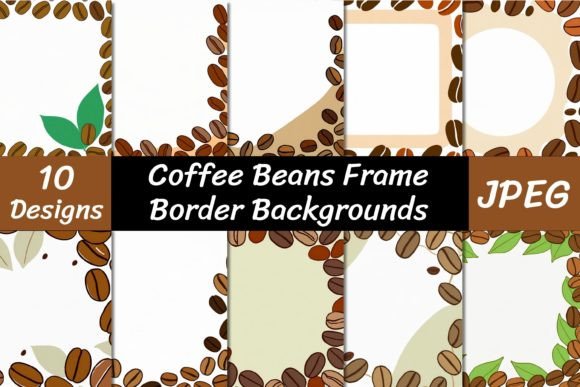
Let's be clear: this isn't just a repeating tile of coffee beans. The Coffee Beans Frame Border Backgrounds set provides 10 distinct digital papers, each at a substantial 3600 x 3600 pixels and a crisp 300 DPI. This high resolution is critical for professional work. It means you can scale these assets for large-format prints—a poster or a trade show banner—without losing the subtle details of each bean's texture and shadow. The visual style walks a line between photorealistic and stylized, giving you the authentic look of real roasted beans with the clean edges needed for digital compositing.
The personality here is unapologetically warm and grounded. Think of the rich, dark browns and deep ambers that dominate a good espresso blend. These backgrounds communicate craftsmanship, a slower pace, and a connection to natural materials. They have an inherent modern typography appeal when paired with clean, sans-serif fonts, but they can also support a vintage or handcrafted aesthetic with the right script font or handwritten font. The frame and border structure within some of the papers is particularly useful, offering a built-in layout guide that can save significant time during the design process.
Practical Applications: Where These Backgrounds Shine
The real value of any design asset is measured by its utility across different media. This collection is a workhorse for several key areas.
- Branding & Identity: For a coffee roaster, café, or artisan bakery, these backgrounds become part of the core brand identity. Use them as the backdrop for your logo on packaging, the header of your website, or the canvas for your social media profiles. They provide instant recognition and set the right customer expectation before they even taste your product.
- Marketing & Digital Content: Creating an email newsletter for a gourmet subscription box? A promotional graphic for a bookstore's author event? These coffee beans frame border backgrounds add immediate thematic depth. They work beautifully as the base layer for social media graphics, making text overlays pop and giving your campaigns a cohesive, professional look.
- Publishing & Editorial Design: In editorial design, texture can guide the reader's eye and establish tone. Use a subtle, scaled-back version of a coffee bean paper as a chapter opener in a cookbook or as the background for a pull quote in a magazine feature about local cafés. It adds a tactile quality to the digital or printed page.
- Packaging & Print: This is where the 300 DPI resolution truly pays off. Design product labels, shopping bags, loyalty cards, or menu boards with a background that feels premium and intentional. The quality ensures your final printed piece looks sharp and expensive, enhancing perceived value.
- Personal & Craft Projects: Don't overlook personal use. Create unique invitations for a coffee-themed party, design custom scrapbook pages, or print out sheets for DIY gift tags. The files are perfect for crafters who have a cutting machine or enjoy digital journaling.
Integrating Texture: A Guide to Effective Use
Simply dropping a background onto your artboard isn't enough. Effective integration requires some thought about visual hierarchy and readability. A busy, detailed coffee bean pattern can overwhelm text if used at full opacity. Here’s how to work with it intelligently.
First, consider opacity and blending modes. In your design software, try reducing the opacity of the background layer to 70-80% to soften its impact. Experiment with blending modes like Multiply (to darken) or Overlay (to blend) to create different effects that let your foreground content remain the hero. Second, use the frame border elements to your advantage. They naturally create a focal point. Place your logo, headline, or key message within the cleaner central area or along the structured border for maximum legibility.
When it comes to font pairing, this is where strategy meets creativity. The organic, textured nature of the coffee beans pairs exceptionally well with typefaces that have their own character. A sturdy serif font like Playfair Display can lend a classic, authoritative feel, perfect for a gourmet brand. A clean sans serif font like Montserrat or Lato provides a modern contrast, keeping the design from feeling too rustic. For a more personal touch, a delicate script font for accents or a handwritten font for a casual vibe can work wonders—just ensure it's highly legible at the size you're using.
Finally, always test your designs at the intended output size. What looks balanced on your monitor might need adjustment when printed as a small business card or viewed on a mobile screen. Check the contrast between your text and the textured background. If readability suffers, add a semi-transparent shape (a white or dark box) behind your text to create a solid reading field. This maintains the aesthetic while ensuring your message gets across clearly.
Remember, these coffee beans frame border backgrounds are tools, not solutions. Their power lies in how you adapt them to serve your specific project's goal—whether that's driving sales, building a community, or simply creating something beautiful. By understanding their visual weight and learning to manipulate them within your compositions, you add a powerful, versatile asset to your creative toolkit.